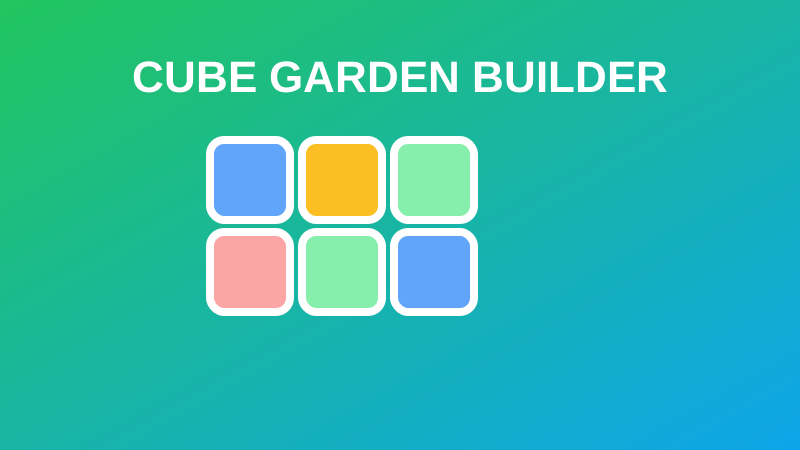
CUBE GARDEN BUILDER
A cozy build-and-match game where kids recreate a tiny color blueprint. Inspired by sandbox creativity and block-building play, with a quiet classroom-friendly goal.
Educational Standards
"With prompting and support, ask and answer questions about key details in a text."
"Make sense of problems and persevere in solving them."
✨ TOP BENEFITS
- ✓Practices visual discrimination and memory
- ✓Supports pattern copying and spatial reasoning
- ✓Uses a low-pressure creative building loop
- ✓Avoids chat, avatars, and open social features
📖 HOW TO PLAY
- 1Study the small blueprint on the left
- 2Tap build tiles to cycle through colors
- 3Match every tile to complete the pattern
- 4Restart to get a new blueprint
Click tiles to cycle colors
Tap tiles to cycle colors
QUESTIONS
Is CUBE GARDEN BUILDER free to play?
Yes. CUBE GARDEN BUILDER can be played for free in a web browser without installing an app.
What skills does CUBE GARDEN BUILDER practice?
Practices visual discrimination and memory
Can kids play CUBE GARDEN BUILDER on a tablet?
Yes. On mobile or tablet, kids can use: Tap tiles to cycle colors.
TRY NEXT

AI LOGIC SEQUENCER
Master the fundamentals of 2026 AI-driven logic. Sequence complex commands, optimize data flows, and train your own virtual agent in this Tier S educational challenge.
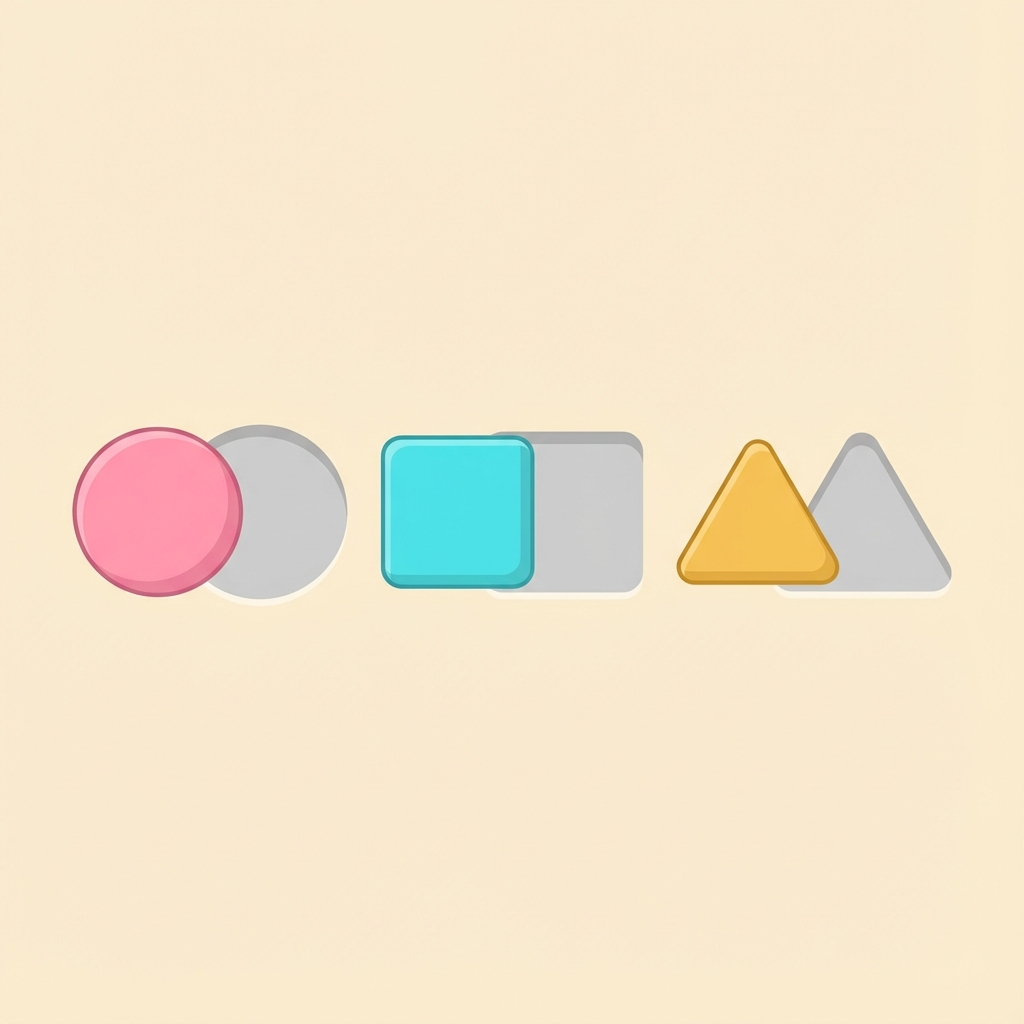
SHAPE SORTER
Drag shapes to their matching holes! An educational puzzle for developing minds.

RAINBOW PAINTER
Paint beautiful pictures with all the colors of the rainbow! Creative fun for artists.
DEEP DIVE & STRATEGY
Cube Garden Builder Strategy Guide
Cube Garden Builder is a small blueprint-copying puzzle. Kids study the color pattern on the left, then tap the build grid until every tile matches. It borrows the satisfying feeling of building blocks while keeping the task quiet, bounded, and classroom-friendly.
What Kids Practice
- Copying a visual model accurately.
- Remembering color positions across a grid.
- Comparing two patterns and checking for differences.
- Persisting through trial and correction.
Parent And Teacher Notes
This game is strongest when children explain their plan. Ask, "Which row are you matching first?" or "How did you find the tile that was different?" These questions make the thinking visible and help the child slow down enough to check their work.
Off-Screen Extension
Give kids a blank 4-by-4 grid. One child designs a blueprint and another tries to copy it, then they compare row by row.