Mental Math
Quick arithmetic and number sense games to make math second nature.
Key Benefits
- Faster calculation
- Numerical confidence
- Mental agility
Why it matters
Fluency in basic math facts allows students to focus on higher-level problem solving without being bogged down by calculation.
🗺️ Curriculum Roadmap
🎮 Games that build this skill

KITTY CLOUD HOP
Help Kitty climb a sparkling sky staircase by choosing dot clouds in counting order. Every correct hop carries the kitten closer to the rainbow.

PENGUIN ICE MATH
Solve a friendly addition or subtraction puzzle and choose the correct ice floe. Ten right answers carry Penguin to the polar celebration.
NUMBER HOP
Hop on numbers in order! A fun counting game for early learners.
MATH QUEST
Help friendly number spirits return to the floating math academy. Solve increasingly challenging arithmetic spells, build streaks, and complete a twelve-spirit quest.
248 HAPPY MERGE
Merge adorable candy blocks! A kawaii 2048-style puzzle adventure with magic power-ups.
QUICK COUNT
Practice subitizing and counting skills. A math game where players identify quantities under a time limit. Designed to support early numerical fluency.
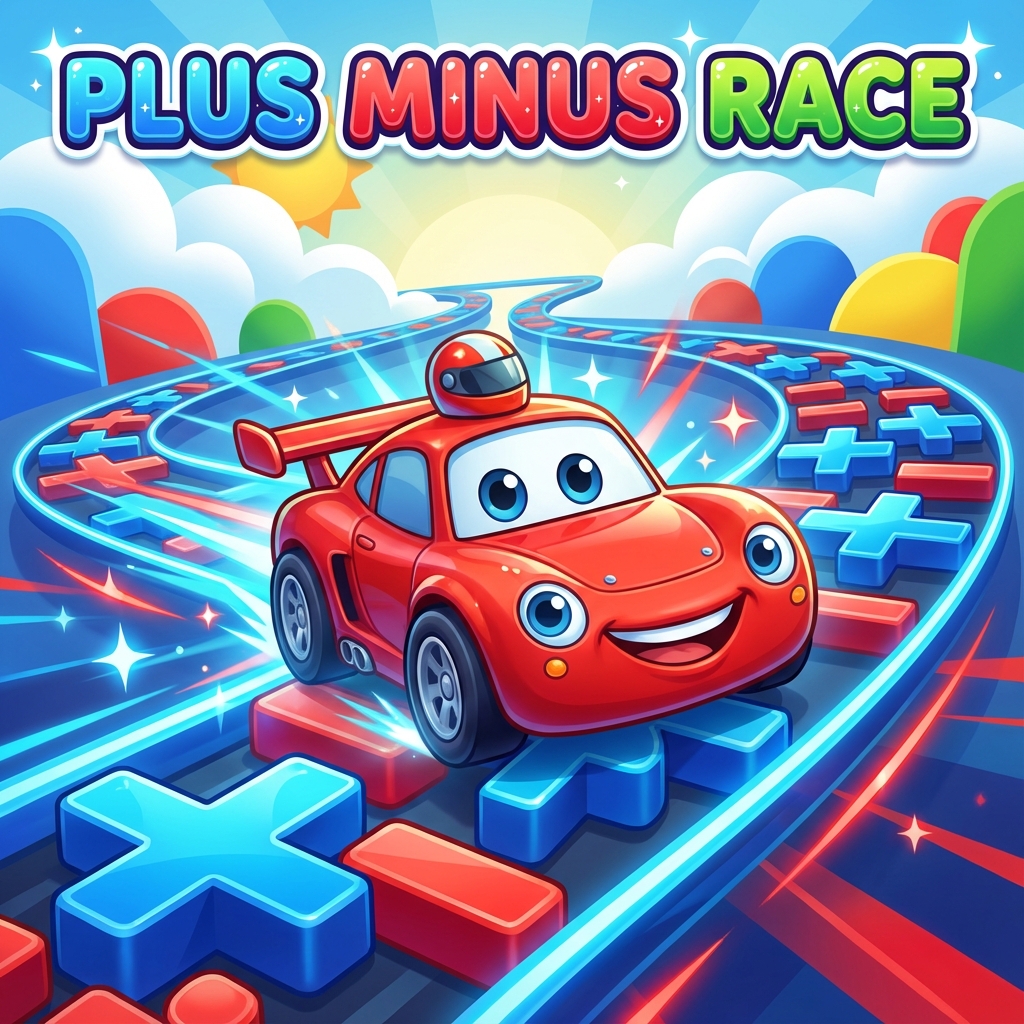
PLUS MINUS RACE
Race your car by solving math! Addition, subtraction, and more as you speed ahead.
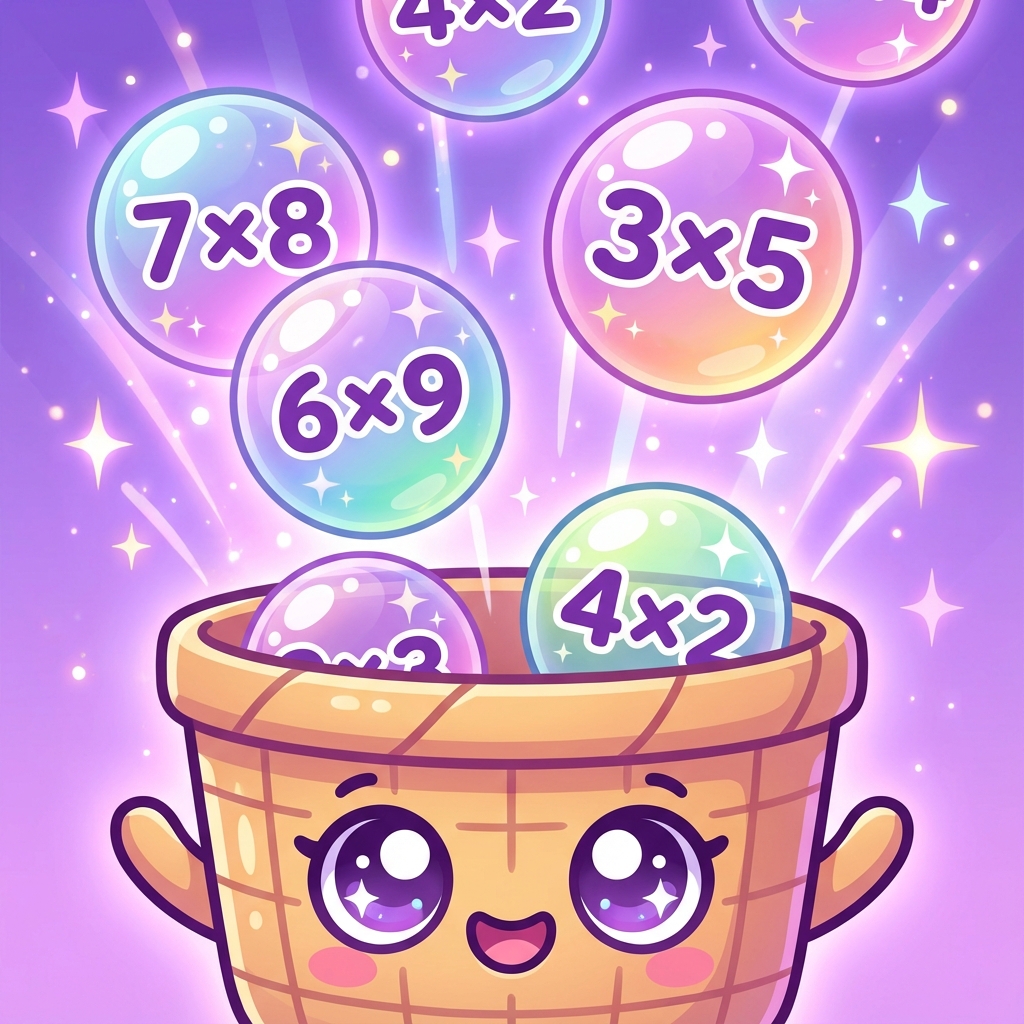
TIMES TABLE CATCH
Catch falling multiplication answers! Train your times tables while having fun.
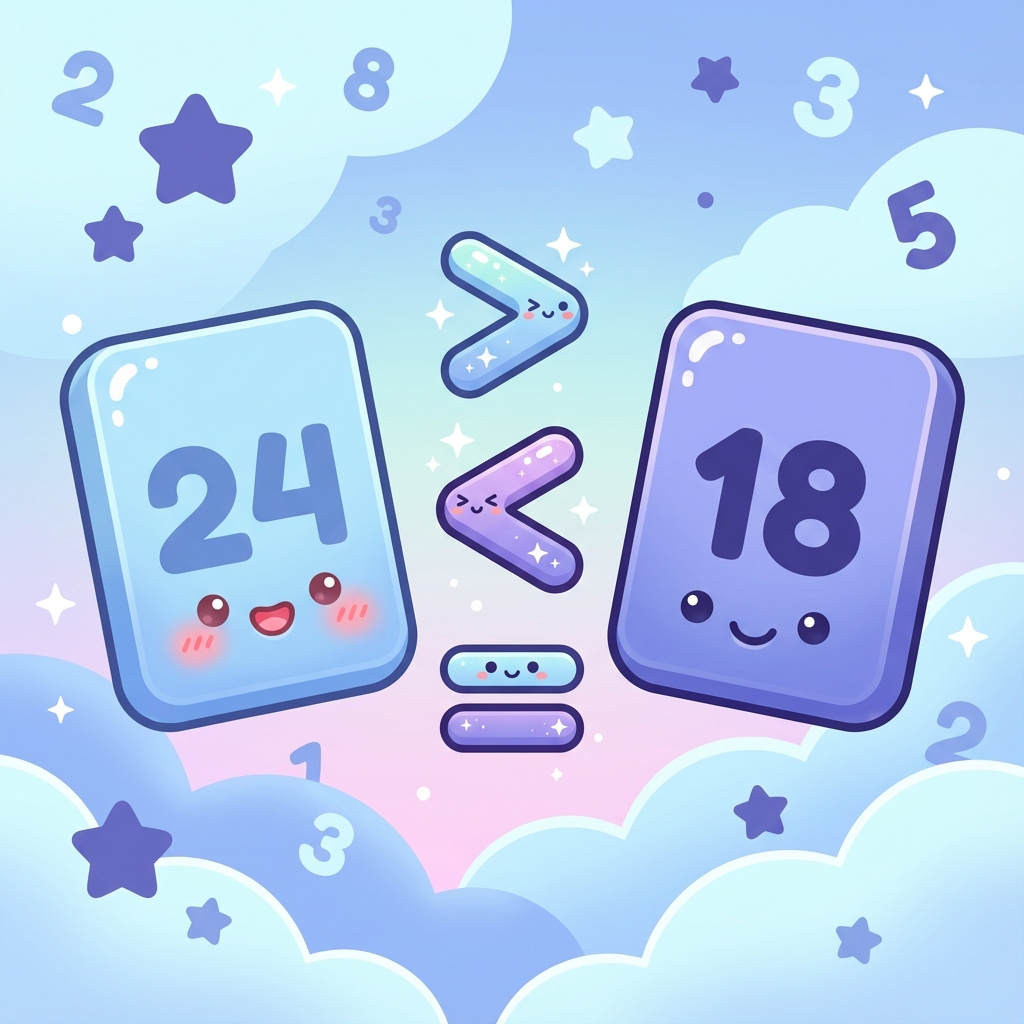
COMPARE QUEST
Greater, less, or equal? Make quick comparisons in this fast-paced number challenge!

CLOCK MASTER
Learn to tell time! Read analog clocks and solve time calculations in this educational game.

FRACTION PIZZA
Slice pizzas into perfect fractions! Fulfill hungry customer orders in this tasty math game.
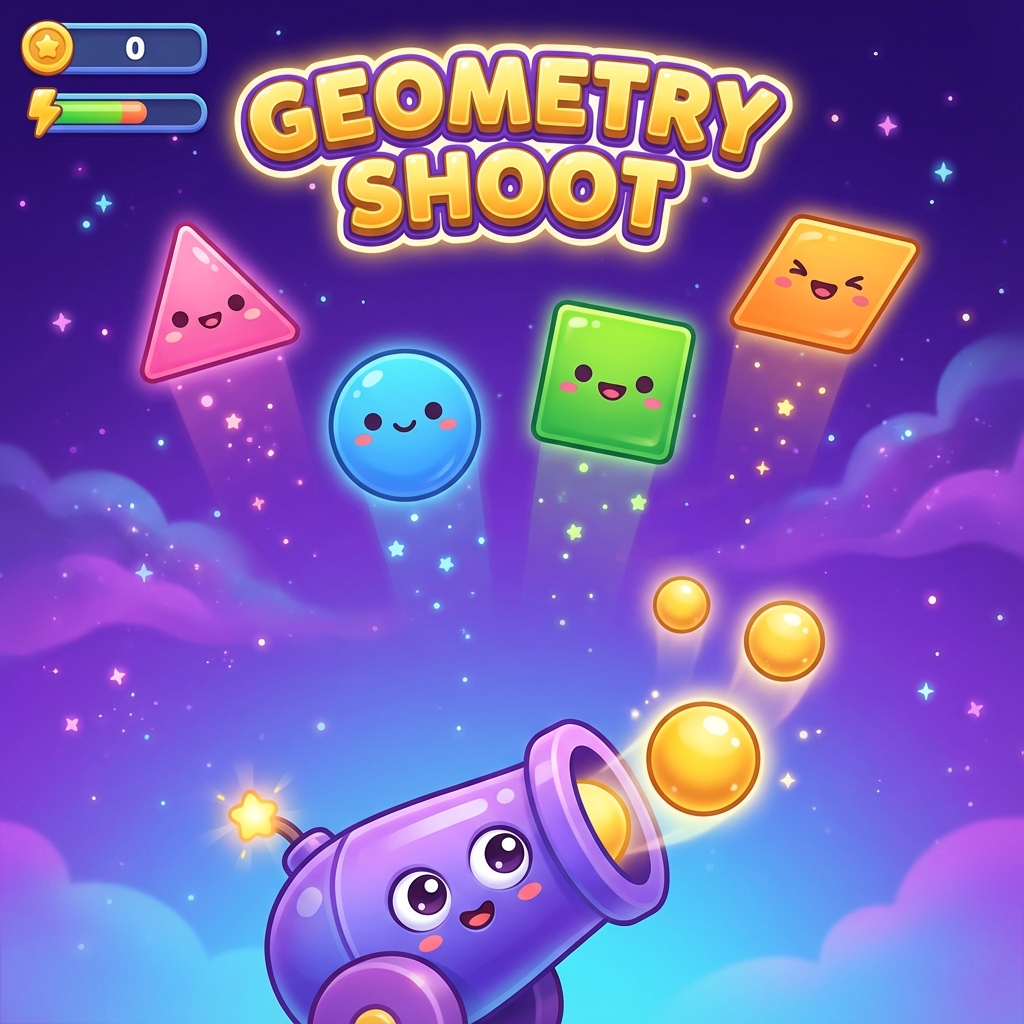
GEOMETRY SHOOT
Shoot the right shapes! Identify triangles, quadrilaterals, parallelograms and more to master geometry.

COUNTING SHEEP
Help the character sleep by counting jumping sheep! A relaxing counting game for little ones.

KIDS MATH KINGDOM
Defend your castle using the power of math! Solve equations to launch magical defenses and protect the kingdom. A fun strategy game for grade 3-6 learners.
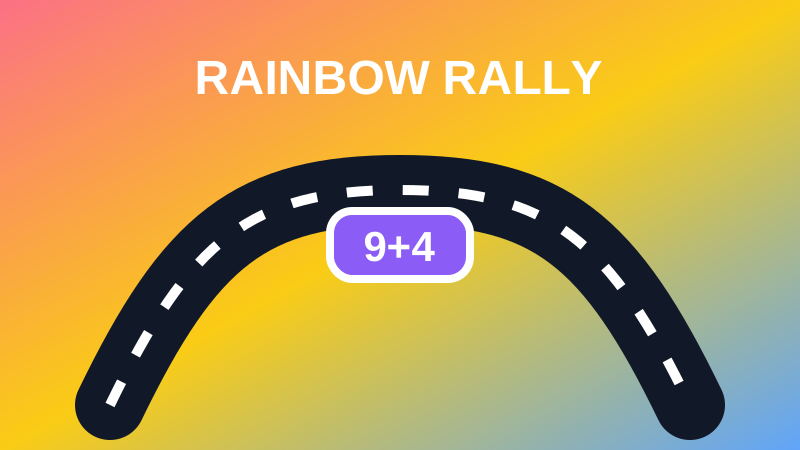
RAINBOW RALLY MATH
A colorful answer-gate racing game where kids steer into the correct math gate. It borrows the joy of kart-style choice lanes without copying any racing world.
🔢 Deep Dive: Mental Math
The Evolution of Mental Math in the Digital Age
Mathematics is frequently cited as the most anxiety-inducing subject for young learners. The transition from tangible, physical objects (counting blocks) to abstract symbols on a page can be a jarring developmental leap. Mental math—the ability to perform calculations "in your head" without paper or calculator—is not just a party trick; it is a critical neurological bridge between standard arithmetic and higher-level algebraic thinking.
When a student possesses strong mental math skills, they possess "number sense." Number sense is a fluid intuition about numbers and their relationships. A child with number sense knows that $9 + 7$ is the same as $10 + 6$, making the calculation instantaneous rather than a tedious counting exercise.
Why Rote Memorization is Failing Our Students
Historically, math fluency was achieved through timed tests ("Mad Minutes") and rote memorization of multiplication tables. While memorization has its place, modern pedagogical research indicates that introducing time pressure before conceptual understanding is solidified is the primary catalyst for "Math Anxiety." When the brain is anxious, the amygdala activates, which actively inhibits the working memory required to solve math problems. It becomes a vicious, self-fulfilling cycle: anxiety causes poor performance, which causes more anxiety.
Digital platforms offer a revolutionary alternative to the anxious "Mad Minute."
-
Visualizing the Abstract: Mental math games can model numbers visually. When a child adds 5 + 3 in a game, they don't just see the symbols; they see 5 objects merge with 3 objects to form an 8-object cluster. Over thousands of repetitions, the brain begins to "see" these clusters when looking at the numbers alone.
-
Self-Paced Progression: Games remove the social anxiety of being the "slowest" to finish a worksheet in a classroom. The software waits patiently, allowing the student's neural pathways to form at their organic pace.
-
Gamified Repetition: To achieve true automaticity (where an answer like 6x7=42 requires zero conscious thought), a child needs thousands of repetitions. Gamification masks this necessary repetition in a layer of intrinsic motivation. A child might refuse to do 50 addition problems on paper, but will joyfully complete 150 disguised as lasers destroying incoming asteroids.
Key Milestones in Mental Math Development
Pre-K to Kindergarten: Subitizing
Subitizing is the ability to instantly recognize "how many" items are in a small group without counting them one by one (like recognizing the 5 dots on a die). Games that flash small groups of objects rapidly train this essential foundational skill.
Grades 1 to 2: Number Bonds and Base-10
Understanding that the number 10 is the building block of our entire number system is critical. Games at this level focus on "friends of 10" (1+9, 2+8, 3+7). Once a child masters this, mental addition becomes a process of making 10s (e.g., $8 + 5 = 8 + 2 + 3 = 10 + 3 = 13$).
Grades 3 to 4: Multiplication as Area and Grouping
Rather than chanting tables, digital games teach multiplication by showing arrays (grids). This builds the conceptual understanding that $4 imes 5$ is not just a sequence of words, but describes 4 groups of 5, or a rectangle with an area of 20.
Overcoming Math Anxiety at Home
Parents are the greatest allies in defeating math anxiety. Here are ways to support mental math development:
- Praise the Process, Not the Speed: When a child gets a correct answer, ask, "How did you figure that out?" Celebrate their unique strategy (e.g., "I knew $5+5$ is 10, so $5+6$ must be 11") rather than just praising the correct sum.
- Normalize Mistakes: If your child makes an error in a mental calculation, do not immediately correct them. Say, "Let's check that together." Mistakes in math are simply hypotheses that need to be adjusted.
- Integrate Math into Daily Life: Ask your child to estimate the grocery bill, calculate the tip (10% is just moving the decimal!), or figure out how many hours until a special event.
Real-World Outcomes
Students who develop automaticity in mental math free up their working memory for complex problem-solving. When they arrive at Algebra in middle school, they aren't bogged down trying to remember what $8 imes 7$ is; they can devote 100% of their cognitive load to understanding variables and equations. By turning math facts into a joyful, rewarding game today, we are paving the smoothest possible road for their future academic journey.