Logic & Reasoning
Games that challenge the mind to think steps ahead and solve complex puzzles.
Key Benefits
- Improves deduction skills
- Enhances strategic planning
- Boosts pattern recognition
Why it matters
Logic is the foundation of mathematical thinking and computer science. Developing these skills early helps in problem-solving across all academic subjects.
🗺️ Curriculum Roadmap
🎮 Games that build this skill

AI LOGIC SEQUENCER
Master the fundamentals of 2026 AI-driven logic. Sequence complex commands, optimize data flows, and train your own virtual agent in this Tier S educational challenge.

SHAPE SORTER
Drag shapes to their matching holes! An educational puzzle for developing minds.
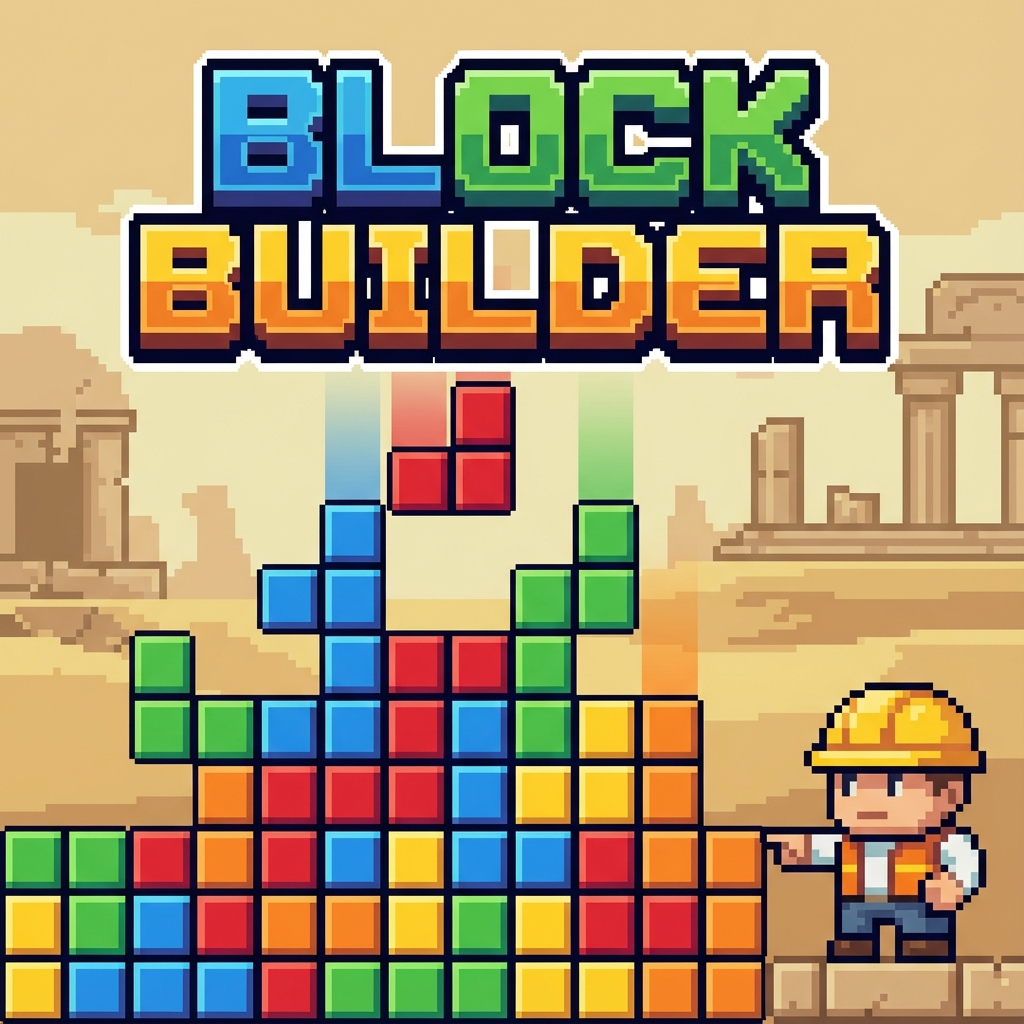
BLOCK BUILDER
Test your architecture skills! Stack blocks perfectly to build the highest tower.
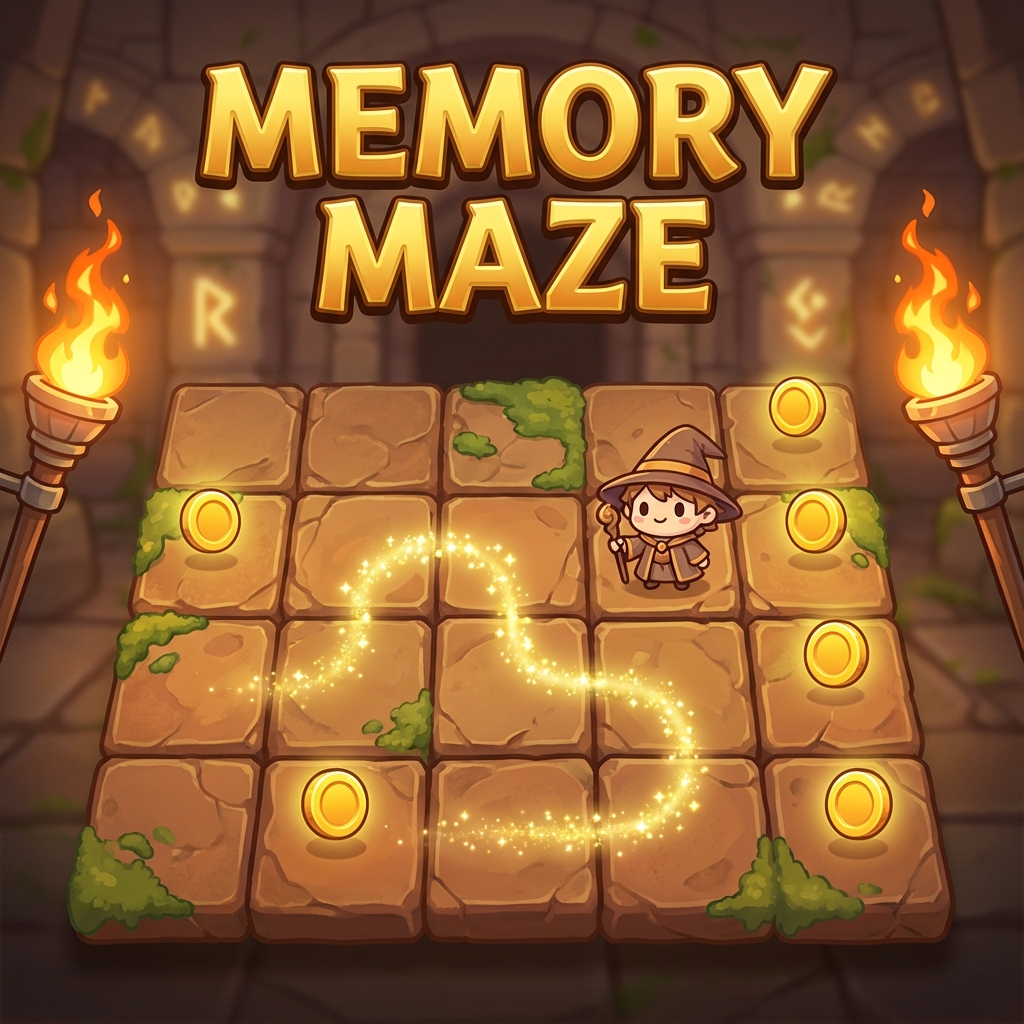
MEMORY MAZE
Memorize the safe path! Navigate through the ancient temple grid without falling.
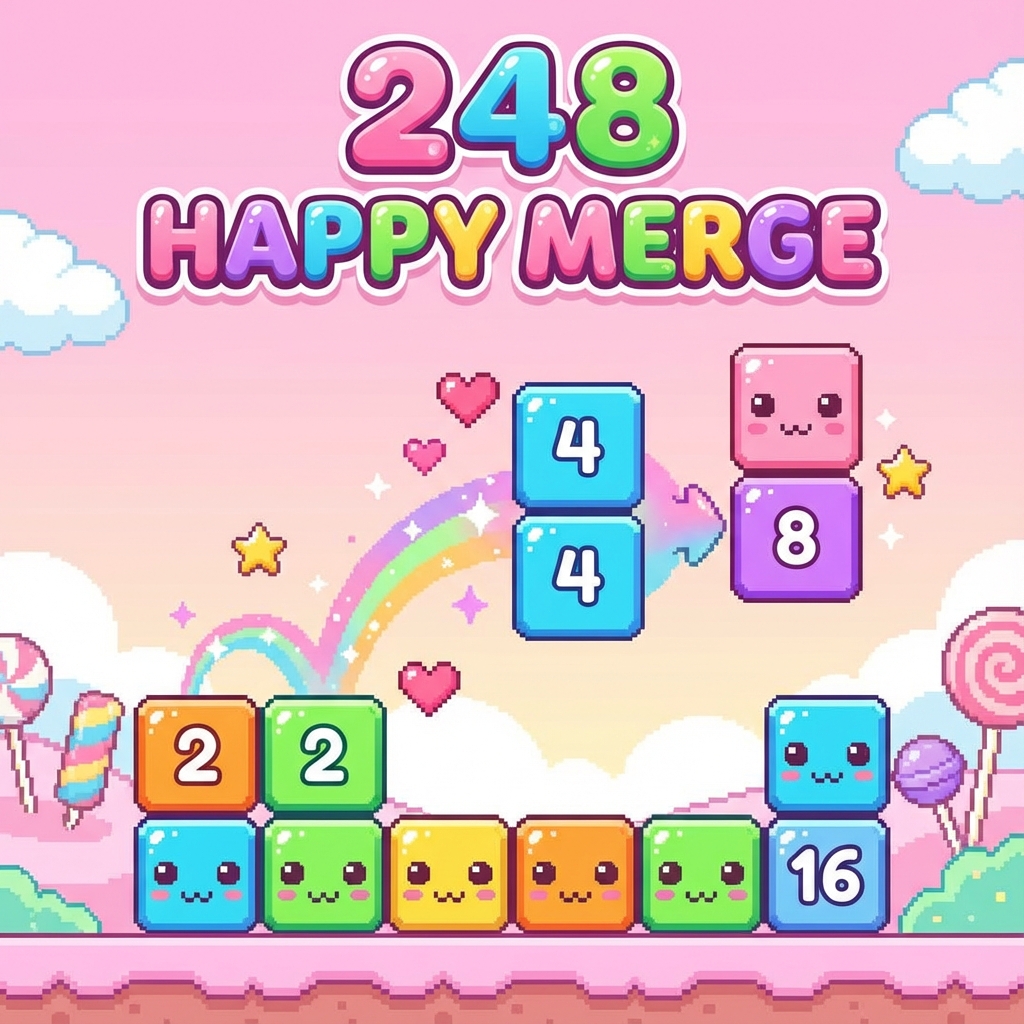
248 HAPPY MERGE
Merge adorable candy blocks! A kawaii 2048-style puzzle adventure with magic power-ups.
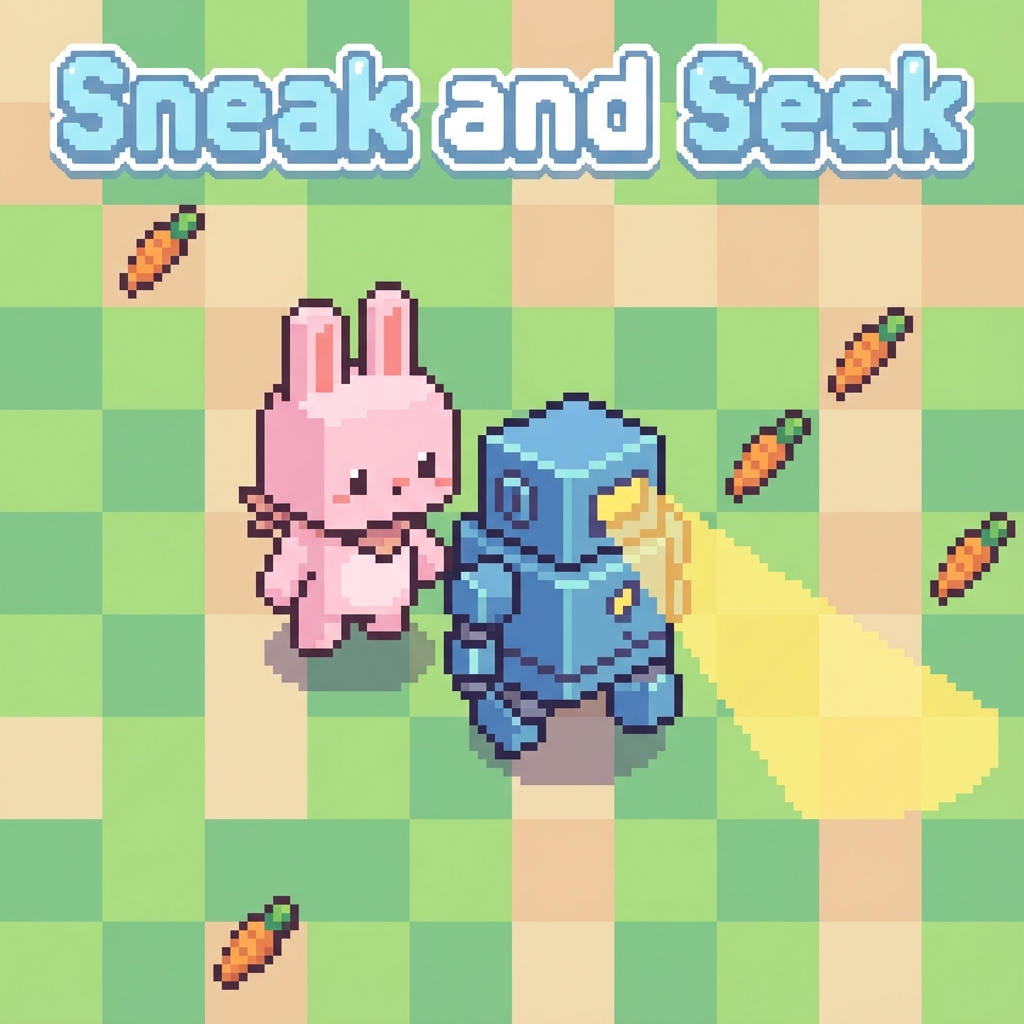
SNEAK & SEEK
Outsmart the robot guards! A turn-based stealth puzzle where you help a bunny execute a sweet heist.

COMPARE QUEST
Greater, less, or equal? Make quick comparisons in this fast-paced number challenge!

WHACK-A-VEGGIE
Tap veggies as they pop up from the garden! A fun reaction game for kids. Be quick and avoid the bees!

KIDS MATH KINGDOM
Defend your castle using the power of math! Solve equations to launch magical defenses and protect the kingdom. A fun strategy game for grade 3-6 learners.

VOLT-VANGUARD
Light up the futurist city in this electrifying logic puzzle. Connect circuits, manage voltage, and master the flow of energy in a stunning neon-lite environments.

CUBE GARDEN BUILDER
A cozy build-and-match game where kids recreate a tiny color blueprint. Inspired by sandbox creativity and block-building play, with a quiet classroom-friendly goal.
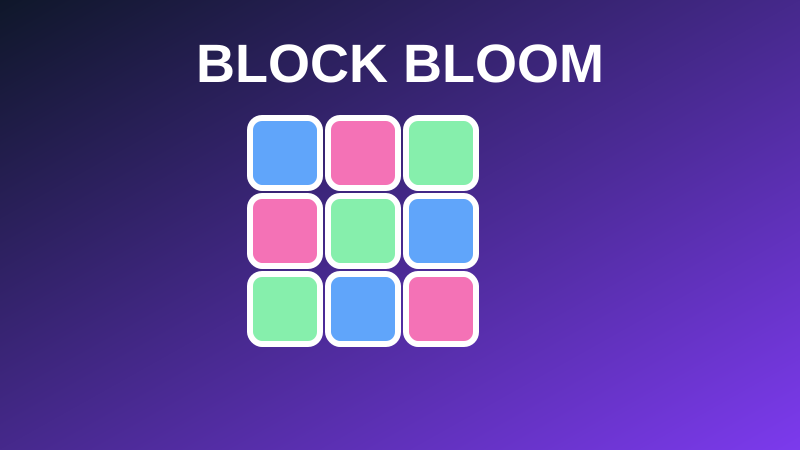
BLOCK BLOOM
A lovely block-placement puzzle where rows and columns bloom away when filled. Inspired by classic block puzzles and modern mobile line-clear games.

SPROUT SPRINT
A peaceful garden sequence game where kids tap plots from seed to sprout to bloom. Inspired by cozy farming and collection games, with no purchases or timers.
🧩 Deep Dive: Logic & Reasoning
Logic & Reasoning: Building the Foundation of Computational Thinking
When we hear the word "logic," we often think of philosophers in ancient Greece or computer scientists writing complex algorithms. However, at its core, logic is simply the systematic process of finding truth based on evidence. For children, developing logic and reasoning skills is the critical difference between memorizing facts and understanding how the world works.
In modern pedagogy, the push to teach "coding" to young children is less about the syntax of Python or JavaScript, and more about teaching "Computational Thinking." Computational thinking is the ability to break down a colossal, intimidating problem into a sequence of small, manageable logic puzzles. This is the exact cognitive skill targeted by the games in our Logic Lab.
The Four Pillars of Logical Thinking
Children encounter several distinct flavors of reasoning as they navigate digital puzzles. Understanding these can help educators and parents recognize the immense cognitive heavy-lifting happening behind the screen.
1. Deductive Reasoning (Top-Down Logic)
Deduction is the process of starting with general rules and applying them to a specific situation to guarantee a true conclusion. (e.g., Rule: All mammals have hair. Fact: A dog is a mammal. Conclusion: A dog has hair.) In Games: Sudoku is the ultimate deductive game. If a '3' must be in this row, and cannot be in this column, it must go in this specific box. Games that require children to use elimination to find the "Odd One Out" or discover a hidden object based on clues are training deductive thought.
2. Inductive Reasoning (Bottom-Up Logic)
Induction is the opposite: observing specific patterns and using them to create a general rule. (e.g., The sun came up yesterday, and the day before. Therefore, the sun comes up every day.) In Games: Pattern recognition puzzles are pure induction. A child sees the sequence: Red Circle, Blue Square, Red Circle, Blue Square... and must induce the rule to predict the next shape. This is the bedrock of algebraic thinking.
3. Spatial Reasoning
This involves visualizing objects in three dimensions and predicting how they will interact if moved or rotated. In Games: Tetris-style block puzzles, pipe-connecting games, and maze navigation require children to mentally rotate objects before physically moving them—a skill highly correlated with future success in STEM (Science, Technology, Engineering, and Mathematics) fields.
4. Algorithmic Thinking (Sequencing)
This is the ability to define a step-by-step set of operations to achieve a goal. In Games: Any game that asks a child to "program" a robot to navigate a grid (Move Forward 2, Turn Left, Jump) is teaching algorithmic thinking. The child learns that sequence matters (putting your shoes on before your socks yields a vastly different result!).
Why Games are the Ultimate Logic Tutors
Logic is notoriously difficult to teach via traditional lectures because it requires active, repetitive problem-solving. Games provide the perfect sandbox for this for three reasons:
- The Safe Sandbox of Failure: In a logic game, making the wrong move does not result in a bad grade; it simply results in the character hitting a wall or the puzzle resetting. This encourages "Iterative Testing"—making a hypothesis, testing it, observing the failure, and adjusting the strategy.
- Instant Feedback: A child knows immediately if their logical deduction was correct. In a classroom, a student might have to wait a week for a graded worksheet to realize their logic was flawed.
- Pacing and Flow: Logic puzzles can easily induce frustration if they are too hard. Adaptive digital games keep the child in the "Flow State" by slowly ramping up the complexity. They introduce one new mechanic (e.g., a locked door), let the child master it, and then combine it with an old mechanic (e.g., a locked door and a sliding ice block).
Fostering Logic Off-Screen
To supercharge a child's logical development, try pulling the concepts learned in games into the physical world:
- The 'Why' Game: When reading a book or watching a movie, pause and ask, "Why do you think the character did that?" or "What do you think will happen next, based on what we've seen?" This practices inductive reasoning.
- Unplugged Coding: Write out a series of physical commands for the child to follow to navigate the living room, or have the child write commands for you. Intentionally misinterpret vague instructions to teach them the importance of precise, logical sequencing.
- Embrace Board Games: Classics like Chess, Checkers, Mastermind, and modern games like Rush Hour or Blokus are incredible physical supplements to digital logic training.
Preparing for an Automated Future
As artificial intelligence and automation handle more of the world's rote tasks, the human ability to think critically, reason logically, and solve novel problems becomes our most valuable asset. By engaging with logic puzzles today, children are actively building the mental frameworks they will use to innovate tomorrow.