kids.omg.land/hubs/retro-zone/
Back to Home
🕹️

Retro Zone

Classic arcade action

Pixel-perfect adventures and timeless challenges from the golden age of gaming.

Key Benefits

Why Retro Zone?

  • Experience classic arcade gameplay
  • Master simple but challenging mechanics
  • Enjoy retro 8-bit and 16-bit aesthetics
  • Test your skills on timeless favorites

🎯How It Helps

Retro games often feature simple, easy-to-understand mechanics that become increasingly challenging. This helps children develop perseverance and hand-eye coordination while experiencing the history of gaming in a safe, ad-free environment.

Frequently Asked Questions

Q:Are retro arcade games safe for kids?

Absolutely. Our retro collection focus on classic mechanics like jumping and dodging with no violent content or social features.

Q:Do I need to download these classic games?

No, all our retro games run directly in your browser. No installs or downloads are ever required.

Q:Why should kids play retro-style games?

Retro games emphasize clear mechanics and pattern recognition. They teach children that mastery comes through practice and understanding simple systems.

Q:Are these games harder than modern games?

They can be! Retro games often require more focus and precision, which is great for developing perseverance and fine motor skills.

🕹️ Retro Zone Guide

The Hidden Educational Value of Retro Gaming

When modern parents think of "educational screen time," their minds naturally drift toward explicitly pedagogical software—apps that directly teach phonics, multiplication tables, or basic coding syntax. The "Retro Zone" on OMG.LAND takes a decidedly different approach. By resurrecting the design philosophies of classic 8-bit and 16-bit arcade games, we provide an environment that deeply trains the "soft skills" of cognitive development: primarily perseverance, pattern recognition, and frustration tolerance.

In this deep dive, we explore why the seemingly simple, pixelated games of the 1980s and 90s offer unique developmental benefits that are often absent in the highly hand-holding design of modern mobile gaming.

The "High-Challenge, No-Penalty" Loop

Modern mobile games, particularly those designed for children, are heavily optimized for continuous engagement. They rarely allow a child to truly "fail." If a player is stuck, the game will often highlight the correct answer, offer a paid power-up, or simply reduce the difficulty dynamically so the player never experiences the friction of being truly stuck. While this keeps the child happily tapping, it starves them of a critical developmental experience: overcoming genuine difficulty.

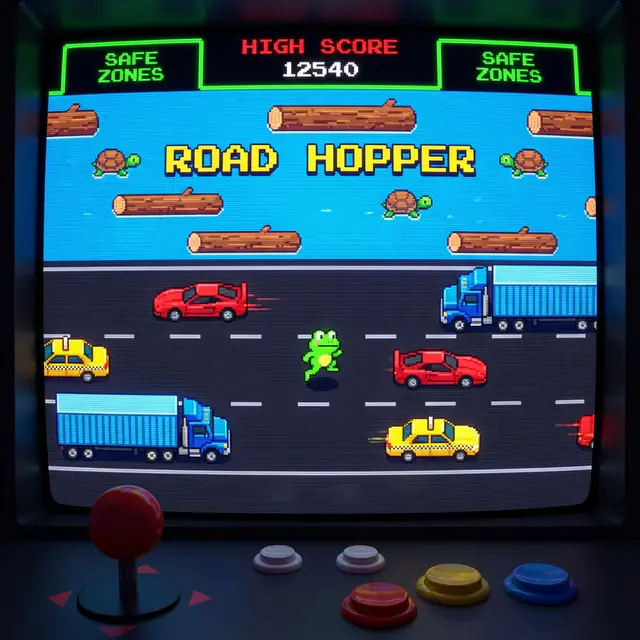
Retro arcade games are built on opposite principles. They demand mastery. You either successfully time the jump, or your character falls, and you must try the level again.

This creates a "High-Challenge, No-Penalty" learning loop. The challenge is steep, requiring intense focus and precise timing. However, the penalty for failure is virtually non-existent—the level instantly resets, and the child can try again within seconds. This rapid iteration teaches children a profound lesson in Growth Mindset: failure is not a reflection of their intelligence; it is simply a data point indicating that they need to adjust their strategy.

Skill 1: Pattern Recognition and Inductive Logic

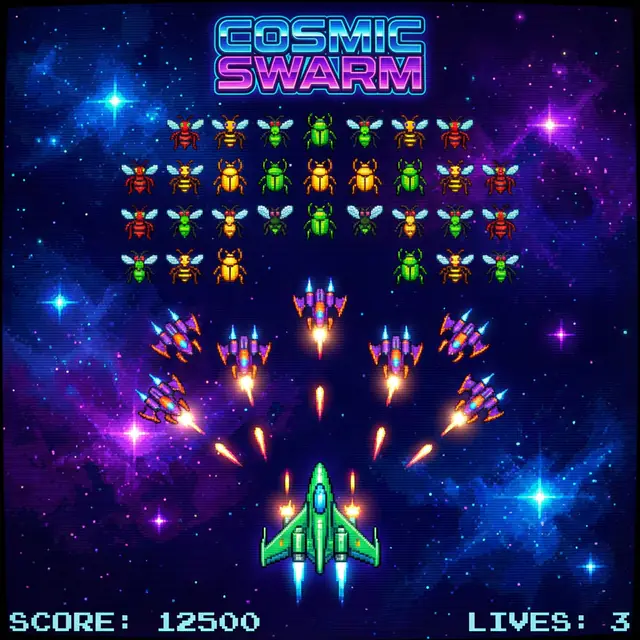
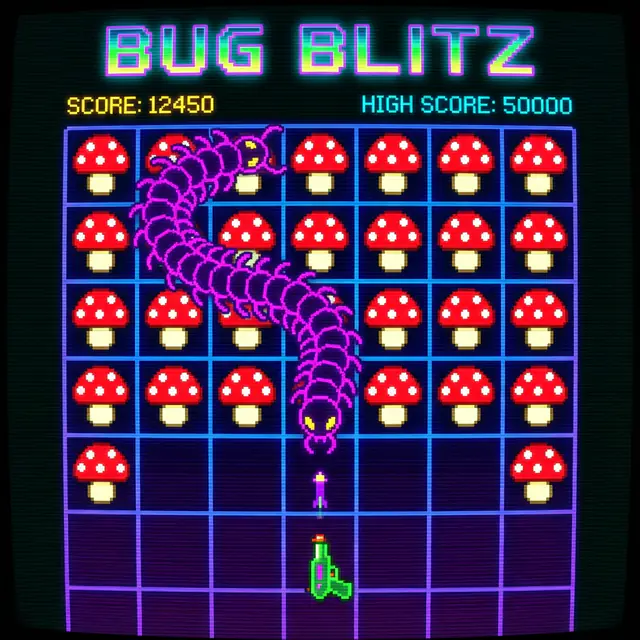
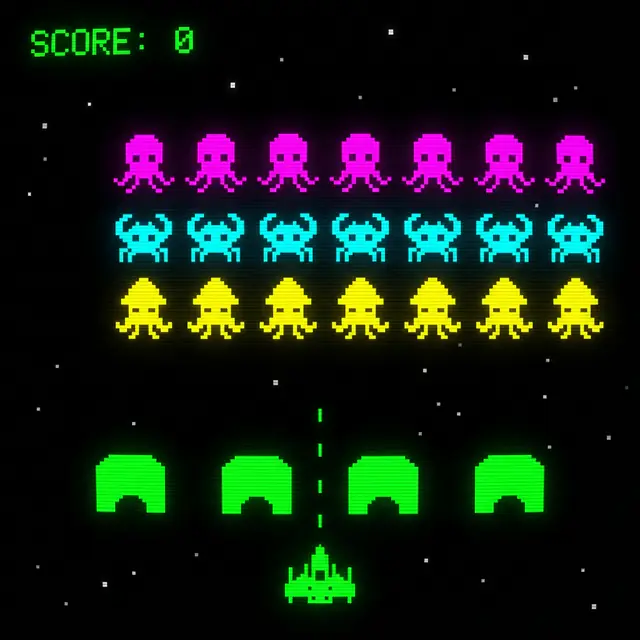
Classic arcade games like Pac-Man or Space Invaders were not random; they were highly deterministic systems governed by strict algorithmic rules. The enemies moved in specific, learnable patterns.

When a child plays a retro-style game in our hub, they are engaging in intense inductive reasoning. They must observe a chaotic screen, identify the underlying rules governing enemy movement, and predict the future state of the board. ("The red alien always moves two steps left before dropping down.") This ability to extract orderly rules from seemingly random data is the exact cognitive muscle used in advanced mathematics and computer programming.

Skill 2: Sustained Attention and "Flow State"

Attention spans are famously contracting in the modern digital era, fractured by short-form video and constant notifications. Retro games demand absolute "sustained attention." Because they do not have auto-save features or frequent checkpoints, completing a difficult level requires unbroken concentration for several minutes at a time.

When the difficulty of a task perfectly matches a child's skill level, they enter a psychological condition called "Flow State"—a state of deep, effortless concentration. While in Flow, the brain is highly receptive to neuroplasticity (the building of new neural connections). The clear, unambiguous goals and immediate feedback of retro games make them incredibly effective at inducing and sustaining this vital state of focus.

Skill 3: Fine Motor Dexterity and Processing Speed

Underneath the vintage pixel art, retro games are engines for developing fine motor control. Navigating a character through a maze of obstacles requires translating a visual input (seeing a laser beam about to fire) into a precise physical output (pressing the spacebar exactly 0.5 seconds later).

This develops "Processing Speed"—the time it takes for a child to perceive information, process it, and respond. Strong processing speed is highly correlated with reading fluency; a child who can quickly process the shapes of letters will read much faster than a child who has to slowly decode each symbol.

Fostering a Healthy Gaming Diet

While retro games are highly beneficial, they are best consumed as part of a balanced digital diet.

  • Celebrate the Struggle: When your child fails a difficult level 10 times in a row and then finally beats it, celebrate their perseverance, not the victory itself. Say, "I am so proud of how you didn't give up when that got really hard."
  • Play Together (Co-Regulation): Retro games are perfect for "pass-the-controller" play. If a child becomes visibly frustrated, taking a turn models emotional regulation. You can show them how to take a deep breath after a failure and calmly analyze what went wrong.
  • Observe the Engineering: Ask your child, "How do you think the person who made this game told the computer to make that enemy bounce like that?" This pivots their brain from being a passive consumer of entertainment to an active analyzer of systems.

The pixel art may be a nostalgia trip for parents, but for children, the Retro Zone is a high-intensity gymnasium for developing the resilience and focus required for 21st-century success.

Ready to explore more categories?

Explore All Games